照片转上下分层粉笔海报
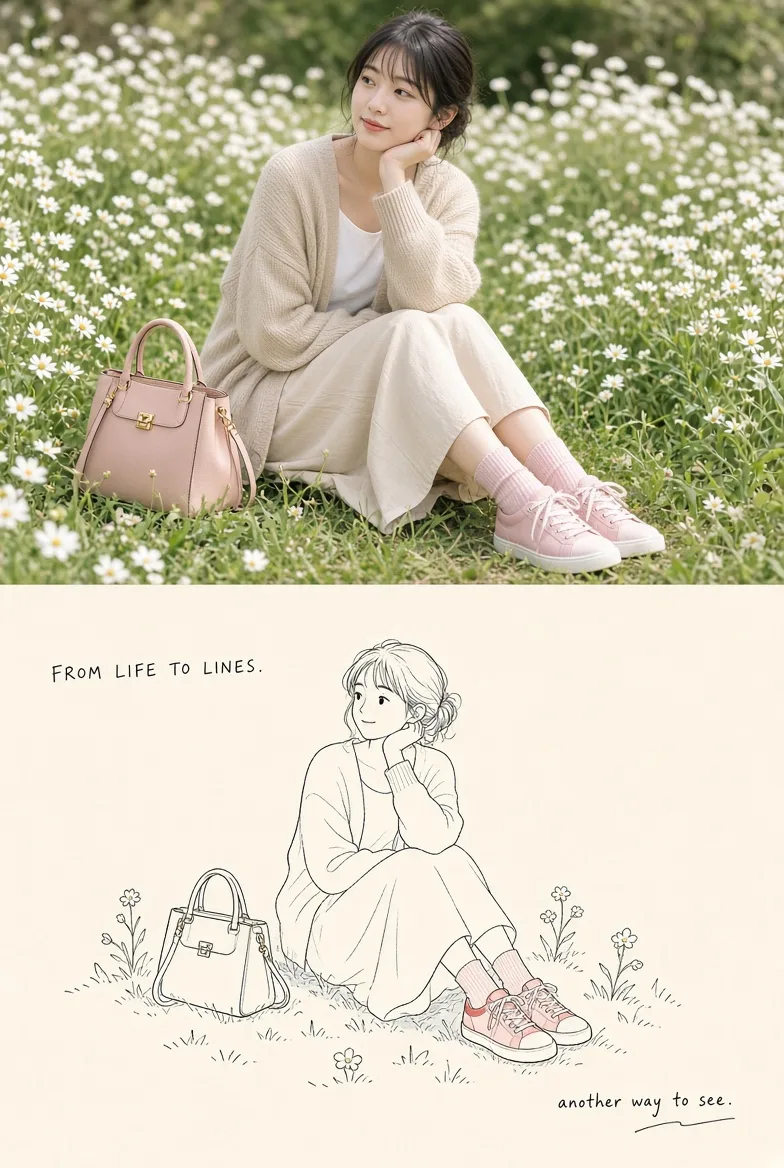
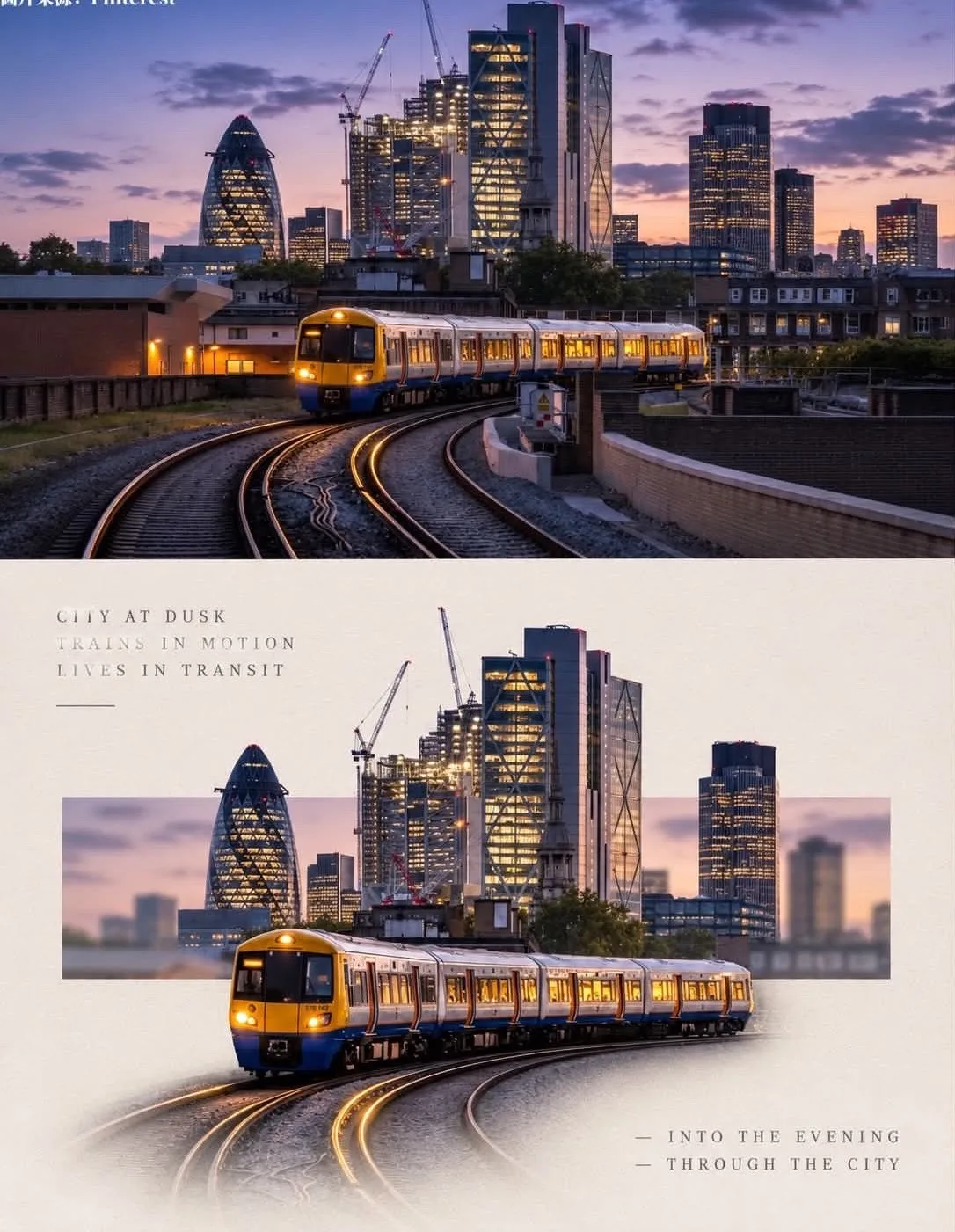
Please make each photo I upload into an independent high-end design poster, no multi-photo stitching, each photo output separately. The overall composition is 3:4 vertical, with the top and bottom two areas strictly 1:1 in height, each occupying 50% of the screen. The upper part keeps the original photo, maintaining the subject identity, structure, posture, real texture, natural lighting, and original color atmosphere, with only slight high-end color grading to give it the texture of an art magazine, independent publication, or exhibition image. To adapt to the frame, the environmental background can be naturally extended, but the subject must not be stretched, distorted, or changed. The upper part only puts the uploaded photo itself, follows the original framing, and does not add any text, borders, or graphics. The lower part extracts the most recognizable subject, silhouette, posture, and narrative relationship from the photo, and reconstructs it as a chalk drawing on a blackboard: a deep green-black blackboard, with a piece of gray-white chalk dust wiped out by an eraser as the base, and the subject drawn with just a few chalk lines. The composition follows 'one subject, one wiped area, large area of black': the subject is drawn in the wiped dusty surface in the lower middle of the blackboard, occupying about one-third of the lower half, and the remaining large area remains a dark blackboard, making the blackboard itself the main part of the picture. Use a broken chalk line to represent the ground or boundary, do not draw the background, and do not fill up the lines. The color scheme is based on the deep green-gray of the blackboard, the subject uses white chalk, only one yellow chalk is used for emphasis in one place, and the rest are gray-white powder marks and erasure marks, with no more than three colors in total. The texture must be a real blackboard chalk texture: the granularity and intermittency of the chalk, lines that vary in thickness due to different pressure, arc-shaped erasure marks left by wiping the blackboard and floating dust, and faint old handwriting marks on the old blackboard that cannot be washed away. There is a small section of wooden chalk trough at the bottom edge of the screen, with only a piece of broken chalk lying in the trough. The text is like a teacher casually writing on the blackboard: a very short chalk handwritten main title, with several very small casual annotations nearby, such as arrows, numbers, and short English phrases, scattered around the subject, wiped together with the subject, with erasure marks and powder at the edges. The text hierarchy remains restrained: one main title plus a maximum of three small annotations, the font is natural handwritten chalk font, not digital font. The overall pursuit is quiet, classroom feel, hand-written feel, with blank space, and a bit of nostalgia. Avoid random use of colored chalk, full-screen graffiti, complex backgrounds, realistic painting, neon or fluorescent effects, commercial advertising copy, and template feel.
About this prompt
The result is a vertically split poster where the upper 50 % preserves the original photo in its natural colors and lighting, slightly color‑graded for a magazine‑quality feel. The lower half is a stylised chalk drawing on a deep green‑black blackboard: a clear, unsaturated black background with a small yellow emphasis mark and sparse white or grey chalk strokes delineating a single subject. The scene feels like a teacher’s chalkboard, with a faint smudge of dust and the wooden chalk trough at the bottom edge. Visual cues come from the high detail of the real photographic portion, balanced by the texture‑rich blackboard surface that includes granular chalk dust, uneven line thicknesses, and faint old handwriting remnants. Compositionally, the chalk drawing occupies the lower centre, roughly a third of the lower half, ensuring a dominant blackboard area with minimal distractions. The overall palette is limited to one green‑grey, white chalk, and a single yellow, reinforcing a quiet classroom vibe. To reuse this, keep the 3:4 vertical framing and the 50/50 height split; swap in any new photo for the upper half while applying a similar light color grade. For the lower part, use a single‑subject sketch style, preserving the chalk texture, but you may adjust the chalk line thickness or add one more annotation to suit the narrative if needed.
More like this