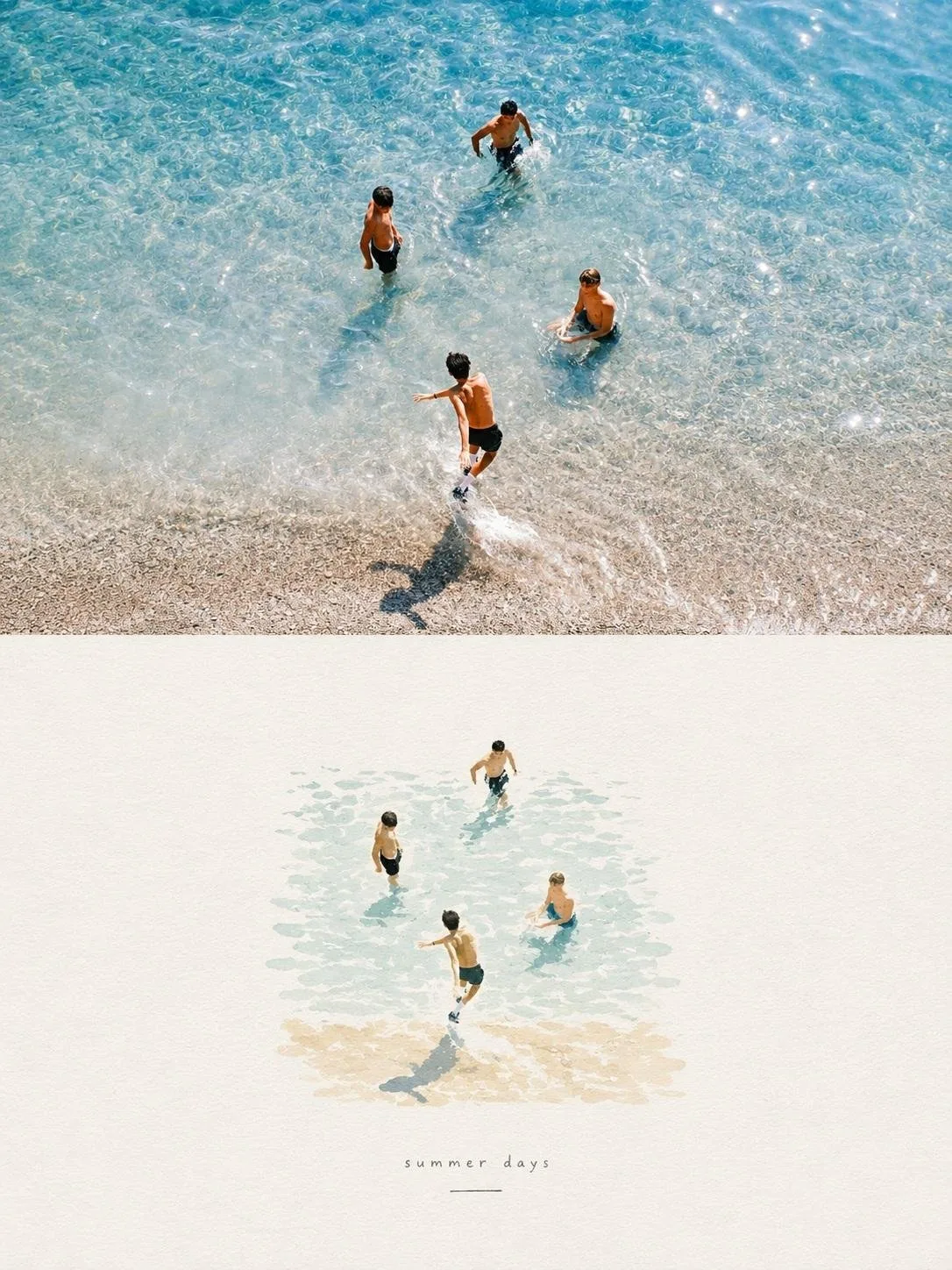
实体纸张物理折痕摄影装置效果
Applicable to any input photo. The upper part of the frame retains the original photo as a clear and complete factual reference; the lower part prints the same photo completely on a piece of matte paper with a real sense of weight and thickness, and naturally forms 1–2 large-scale, stretching folds or curved undulations according to the movement, posture, or main spatial direction of the subject in the picture. The paper must present realistic physical bending: partial lifting, pressing down, rolling, or slight suspension, creating accurate contact shadows and spatial occlusion. The characters, buildings, scenery, textures, and perspective relationships in the original photo continuously cross the creases, undergoing spatial changes along with the actual bending of the paper surface, without being fragmented, redrawn into another painting, or adding unrelated objects that do not exist in the original image. The focus is on using the folded surfaces to reorganize the scale, hierarchy, and spatial relationship of the original image, giving the flat photographic image a three-dimensional tension similar to a sculpture or paper art installation. The edges of the paper can reveal subtle paper core thickness, indentations, and slight natural wear, but the overall look remains restrained and realistic. The background uses a large area of warm white or off-white empty space, with soft and natural lighting, highlighting the volume, fold lines, and shadows of the paper itself. A line of minimalist and restrained handwritten observation text can be added to the blank area, like a photographic note or exhibition annotation. The overall effect should be like a "real photo printed onto a physical surface that can be bent," rather than adding a water ripple filter to the photo. Avoid: liquid water ripple effects, digital distortion filters, regular sine waves, cheap 3D deformation, fragmented origami, excessive creases, multi-image collages, duplicate subjects, extra decorations, over-artistic redrawing.
More like this