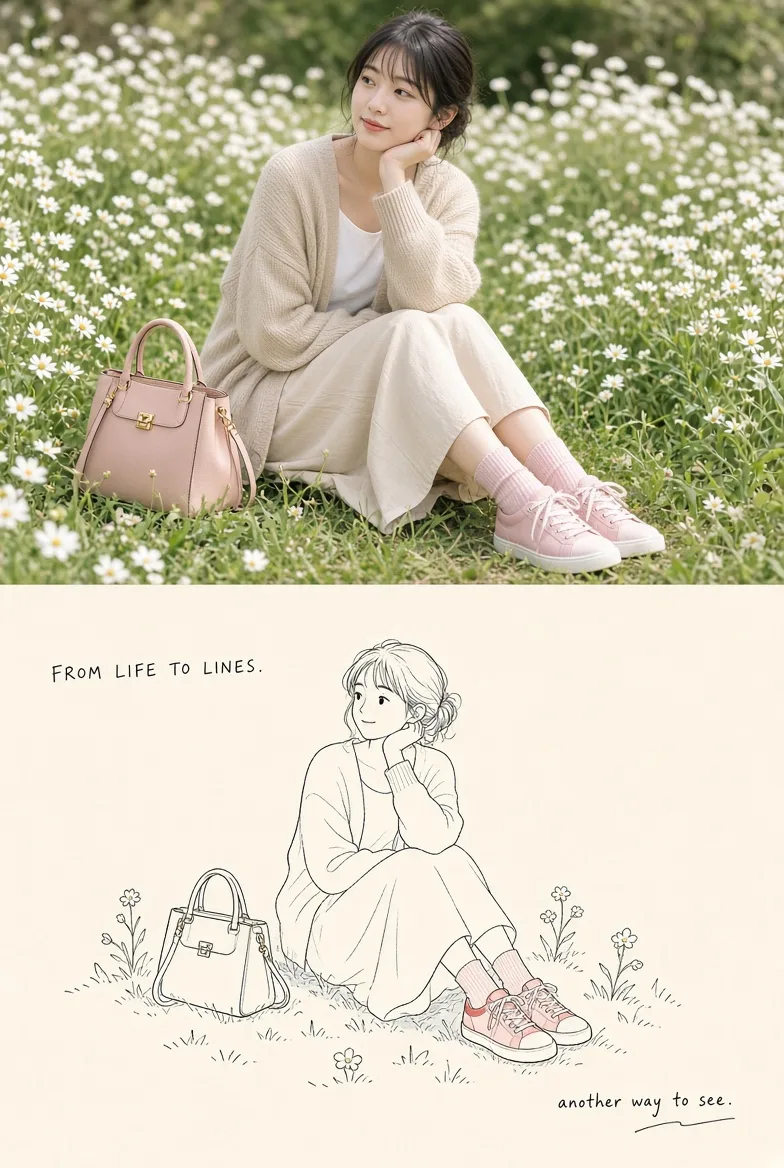
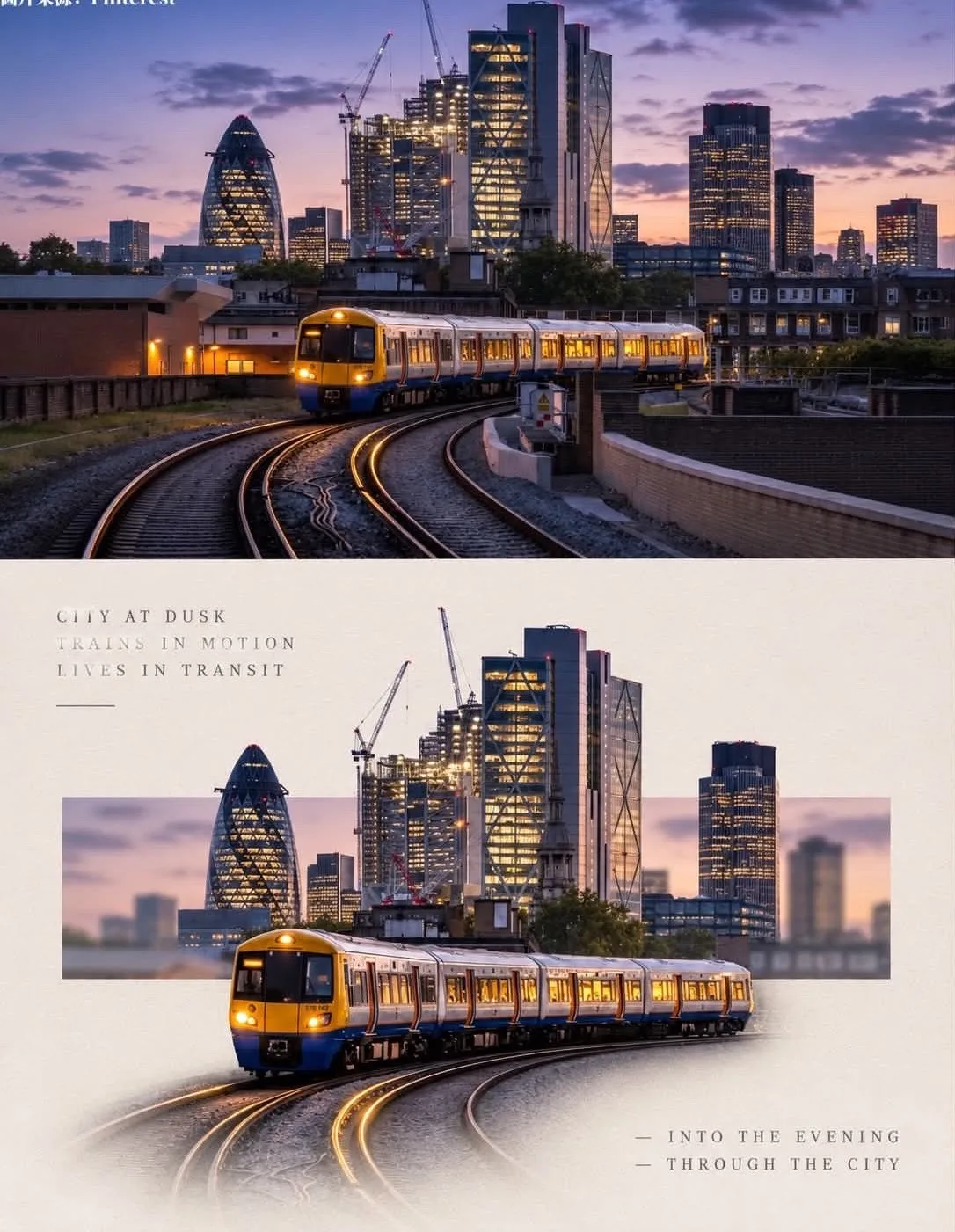
第二世界摄影与微缩纸艺分屏海报
Create a 3:4 vertical “Second World” photographic art poster using [LOCATION / DESTINATION / SUBJECT] as the sole visual reference. COMPOSITION: Divide the canvas into two equal horizontal halves. TOP HALF — ORIGINAL PHOTOGRAPH: Preserve the photograph as faithfully as possible, including its subject, gestures, composition, perspective, colors, and natural lighting. Allow only necessary proportional cropping and subtle color correction. Do not redesign the scene. BOTTOM HALF — THE SECOND WORLD: Use a warm ivory paper background with generous negative space. Study the photograph’s most distinctive visual feature—such as water, reflections, shadows, roads, architectural edges, light, or human movement—and transform it into an imaginative miniature world that grows naturally from the image itself. CREATIVE INTERPRETATION: Let the photograph’s shapes and contours inspire the paper construction and visual narrative. Create an original, location-specific concept using refined paper-cut layers, subtle folds, tactile materials, realistic depth, and delicate shadows. Introduce miniature objects or tiny figures only when they meaningfully enhance the idea. Avoid generic templates and unnecessary decoration. VISUAL STYLE: A sophisticated fusion of authentic photography, handcrafted paper art, and miniature spatial storytelling. Maintain believable perspective, understated elegance, and poetic visual connections between the two halves. The lower scene must feel uniquely derived from the photograph, not like a simple copy, random collage, or conventional pop-up book. Avoid excessive fantasy, distorted subjects, unrelated props, watercolor filters, clutter, titles, readable text, borders, and watermarks. FORMAT: 3:4 vertical, precise 50/50 horizontal division.
About this prompt
This prompt asks a photographer or designer to split a single 3:4 canvas vertically into two perfectly balanced halves. The upper half presents an unaltered still image of a chosen location, subject, or scene – faithfully keeping composition, natural lighting, and color. The lower half is a hand‑crafted paper‑cut miniature that takes a key visual cue from the photograph – a road, reflection, or architectural edge – and expands it into a subtle, tactile world of paper, folds, and shadow. Key technical cues come from the instructions on preserving the image, using an ivory paper backdrop, adding realistic depth with layered paper, and steering clear of generic pop‑up aesthetics. The result is a sophisticated, poetic contrast: crisp real photography joined by a delicate, crafty paper landscape that appears to grow directly from the original. To adjust this concept, keep the 50/50 split and the faithful top half, but experiment with the scale or texture of the paper art: try a warmer paper tone or add small metallic accents to highlight the miniature’s edges. If you want a brighter feel, replace the ivory with a light pastel background while maintaining the subtle fold work.
More like this