Travel Art Poster From Photo
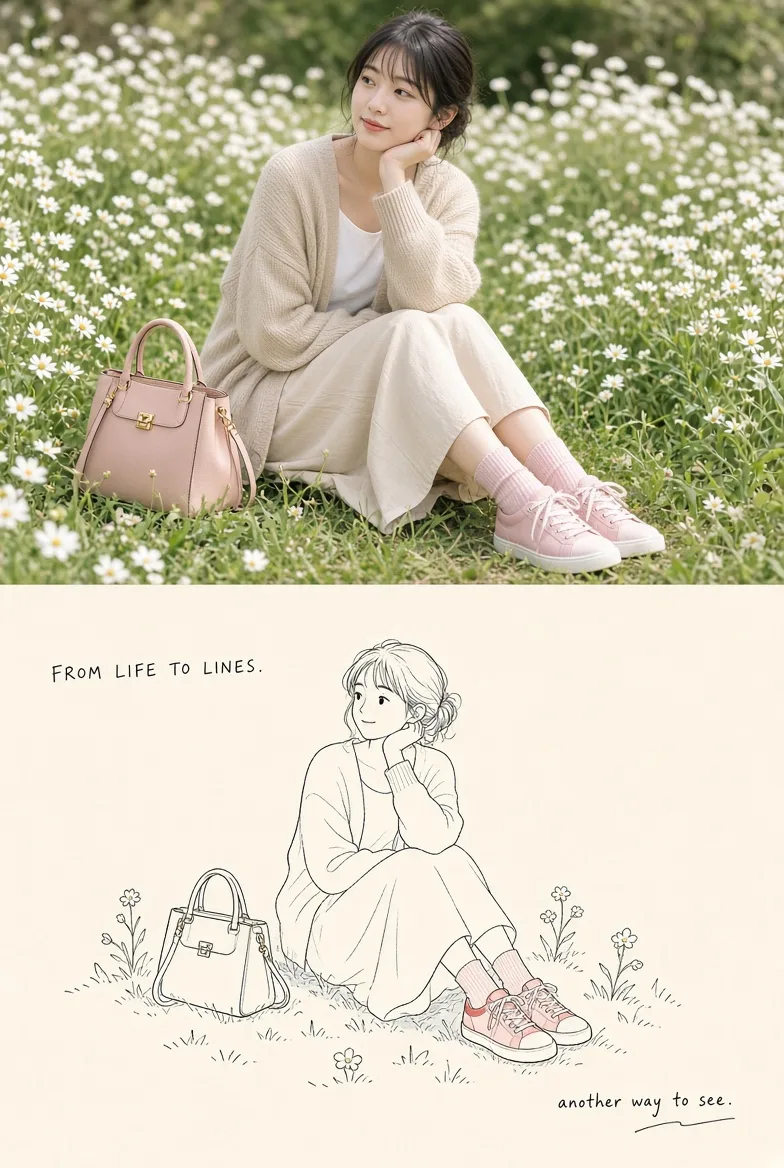
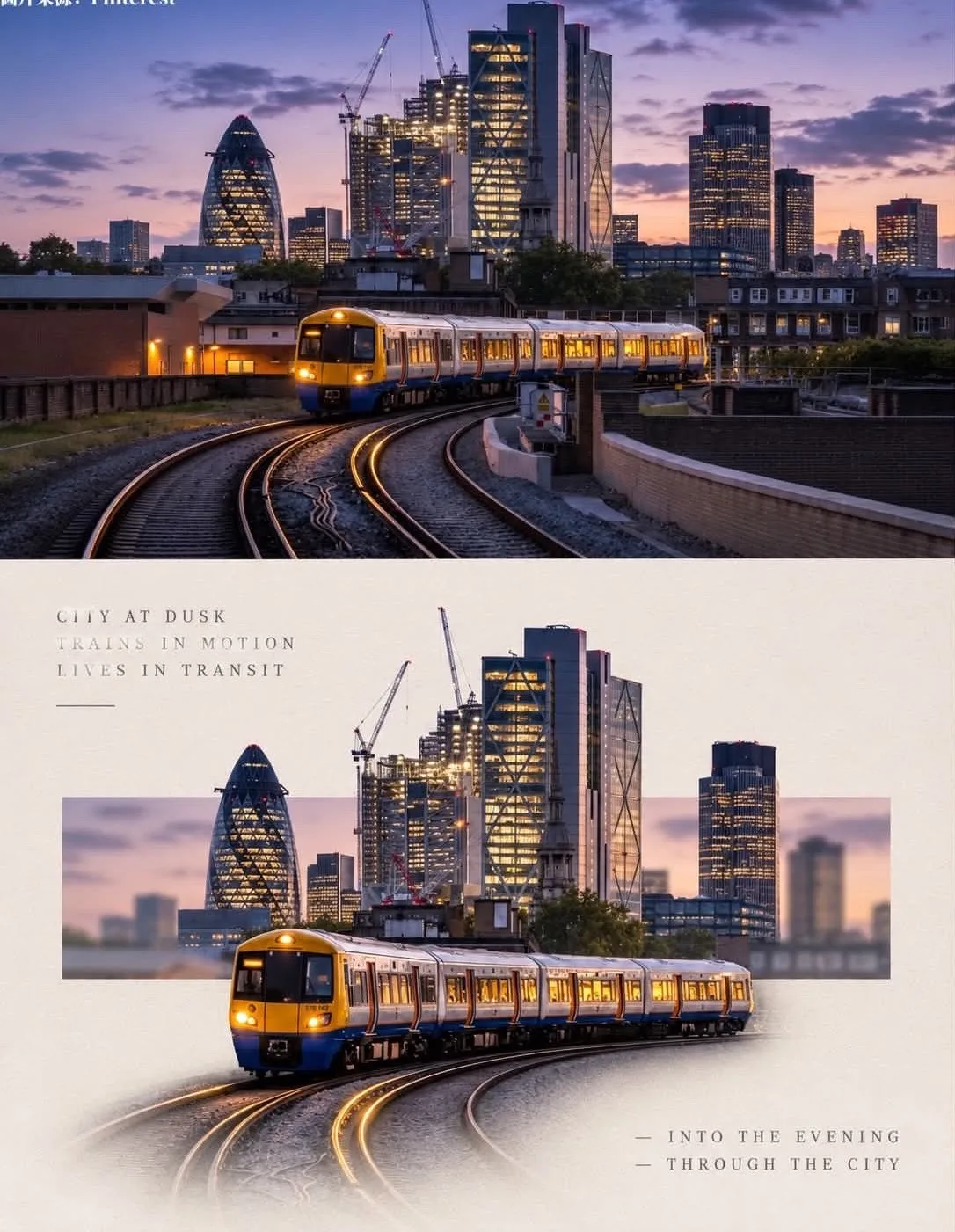
Create a sophisticated contemporary travel-art poster from the uploaded londscape photograph. Strict 3:4 vertical format. The upper half must remain the original landscape photogroph. Preserve all important environmental structures, natural textures, lighting, shadows, horizon, architecture, people and perspective. Do not regenerate the scene. The lower half reconstructs the landscape's strongest narrative element using delicate photographic fragments, halftone printing, subtle paper fibers and fading edges. Use a single horizontal geometric color field sampled from the landscape. Let the reconstructed subject or horizon physically intersect this field. Keep the background most white with muted tones derived from the original image. Avoid saturated colors. The result should resemble a limited-edition museum travel poster rather than a conventional photo collage.
About this prompt
The image combines a realistic landscape photo in the top half with a stylized poster graphic below. The vista—mountains, clouds, people, or city elements—stays unchanged, preserving natural light, shadows, and perspective, while the lower part transforms essential features into a soft, paper‑like collage of halftone fragments and faded edges. The overall mood feels museum‑grade, refined, and narrative, fitting a limited‑edition travel poster. Key to this effect is the strict 3:4 vertical frame and the rule that the top retains the live photography, complete with texture, lighting, and horizon. The lower half uses halftone printing and subtle paper fibers, all under a single horizontal color field sampled from the landscape. A muted, white‑dominant background keeps the palette subdued, avoiding saturated hues so the piece looks polished yet understated. To adapt, keep the top cut‑in untouched but experiment with different color fields—perhaps the sky’s blue or the forest’s green—to highlight a new storytelling angle. Alternatively, replace the halftone fragments with vector shapes or digital brush strokes while maintaining the paper fiber texture to explore a more graphic‑design feel.
More like this