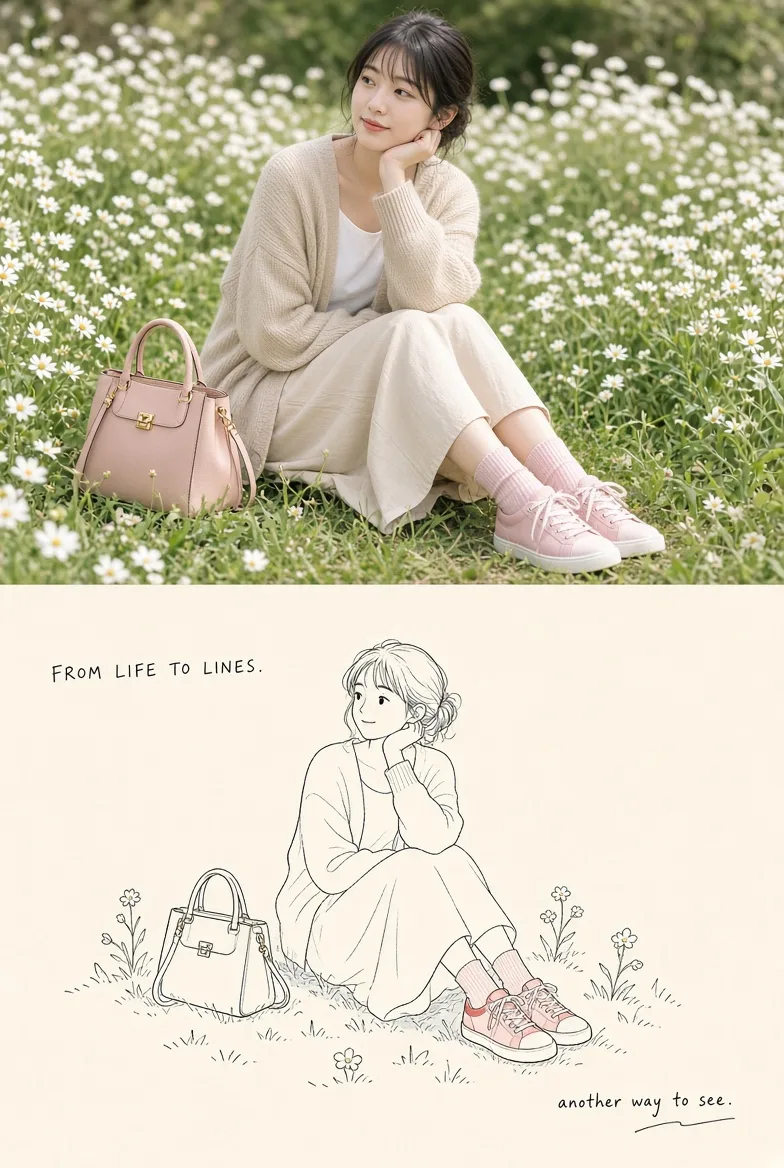
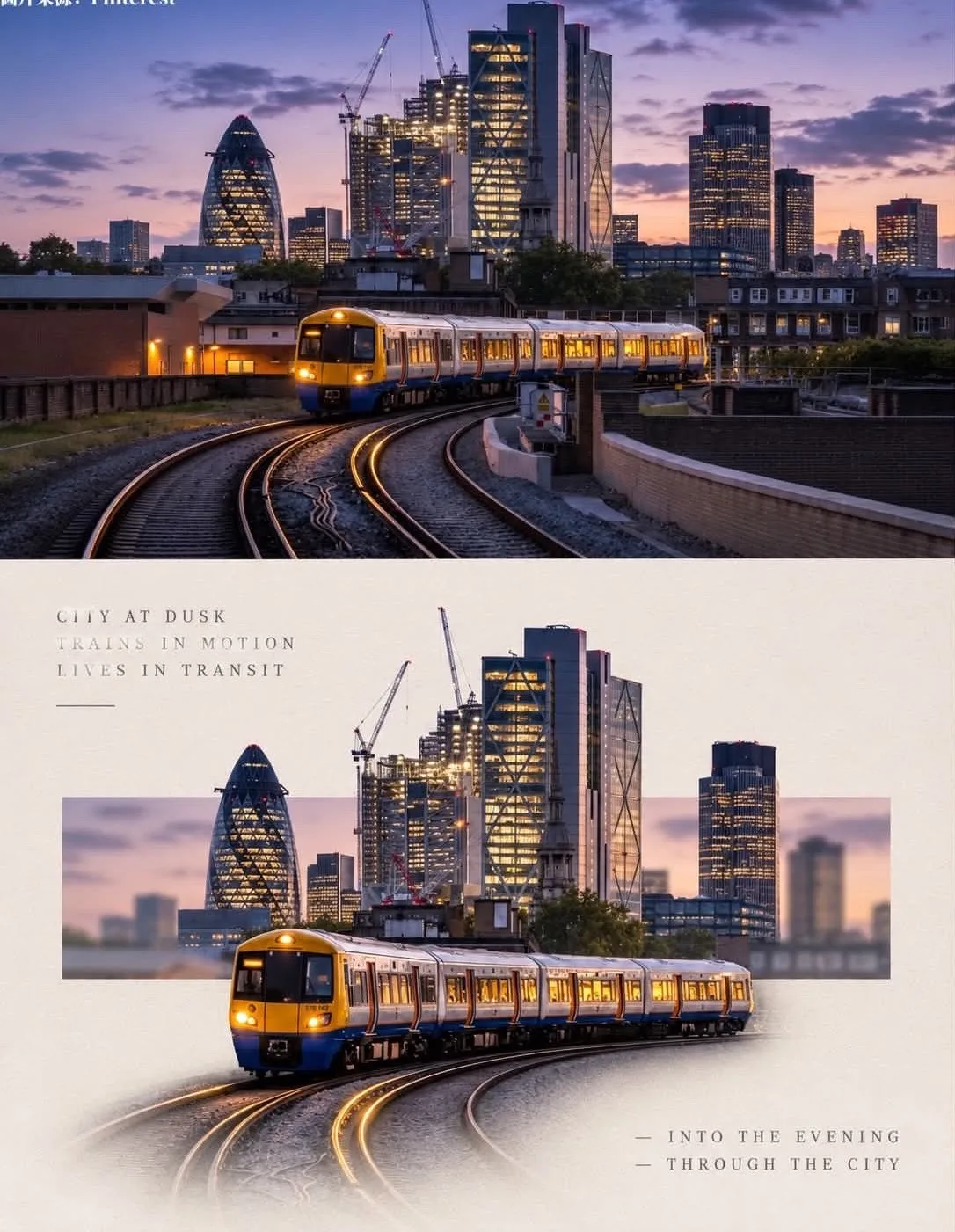
旅游记忆立体书海报摄影提示词
Create a 3:4 vertical travel-memory poster using [LOCATION / DESTINATION / SUBJECT] as the only scene reference. COMPOSITION: Divide the image into two equal horizontal halves. TOP HALF — REAL PHOTOGRAPH: Preserve the original photograph as faithfully as possible, retaining recognizable architecture, natural proportions, perspective, lighting, shadows, and environmental details. Allow only subtle color correction and necessary cropping. Do not redesign or invent elements. BOTTOM HALF — POP-UP PAPER WORLD: Show a real open travel journal against a warm ivory background, with visible page thickness, a defined spine, gently curled corners, and tactile paper texture. Reconstruct the photograph’s most distinctive landmarks and environmental features as a miniature three-dimensional paper-cut scene rising from the pages. Use delicate architectural linework, restrained pastel coloring, layered cutouts, folded paper, realistic occlusion, and natural contact shadows. TRANSITION: Connect both halves organically using elements from the actual location, such as a river flowing into the book, a street continuing across the spine, or trees transforming into layered paper shapes. Make the transition feel spatially continuous rather than like a collage. STYLE: A sophisticated blend of authentic photography, handcrafted paper engineering, and minimalist travel-journal artistry. Preserve the destination’s identity and create the feeling of collecting a real place inside a book. Avoid turning the photograph into an illustration, flattening the paper scene, distorting landmarks, adding unrelated objects, excessive decoration, titles, readable text, or watermarks. FORMAT: 3:4 vertical, exact 50/50 horizontal split.
About this prompt
A vertical poster that blends a crisp 3:4 photograph of a destination with a delicate pop‑up paper journal at the base. The top half shows the real architecture and natural lighting of a place, while the bottom half presents a hand‑crafted paper book with miniature 3‑D cut‑outs of the same landmarks, giving a sense of holding the city inside a book. The effect is achieved by keeping the original photo untouched—exact perspective, shadows, and subtle color tweaks—then carving a paper world that mirrors the photo’s key features. Warm ivory paper, pastel tones, and realistic shadows are used for the bottom half, with a river or street bridging the two halves to suggest continuity. To adapt, simply replace the placeholder location name in the prompt. Keep the 50/50 split, the raw photo integrity, and the three‑dimensional paper design; swap the color palette or paper texture if you want a different mood.
More like this