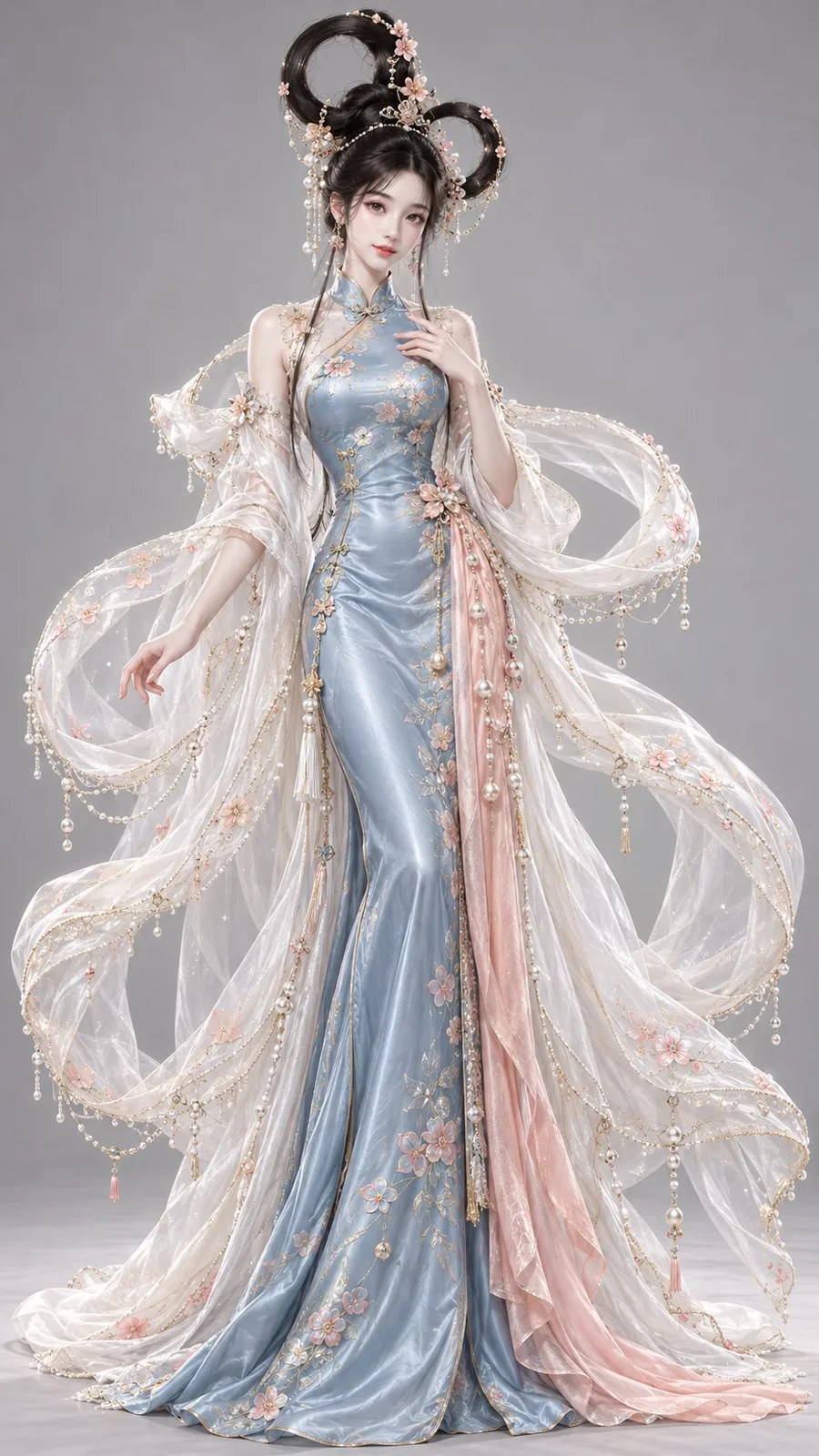
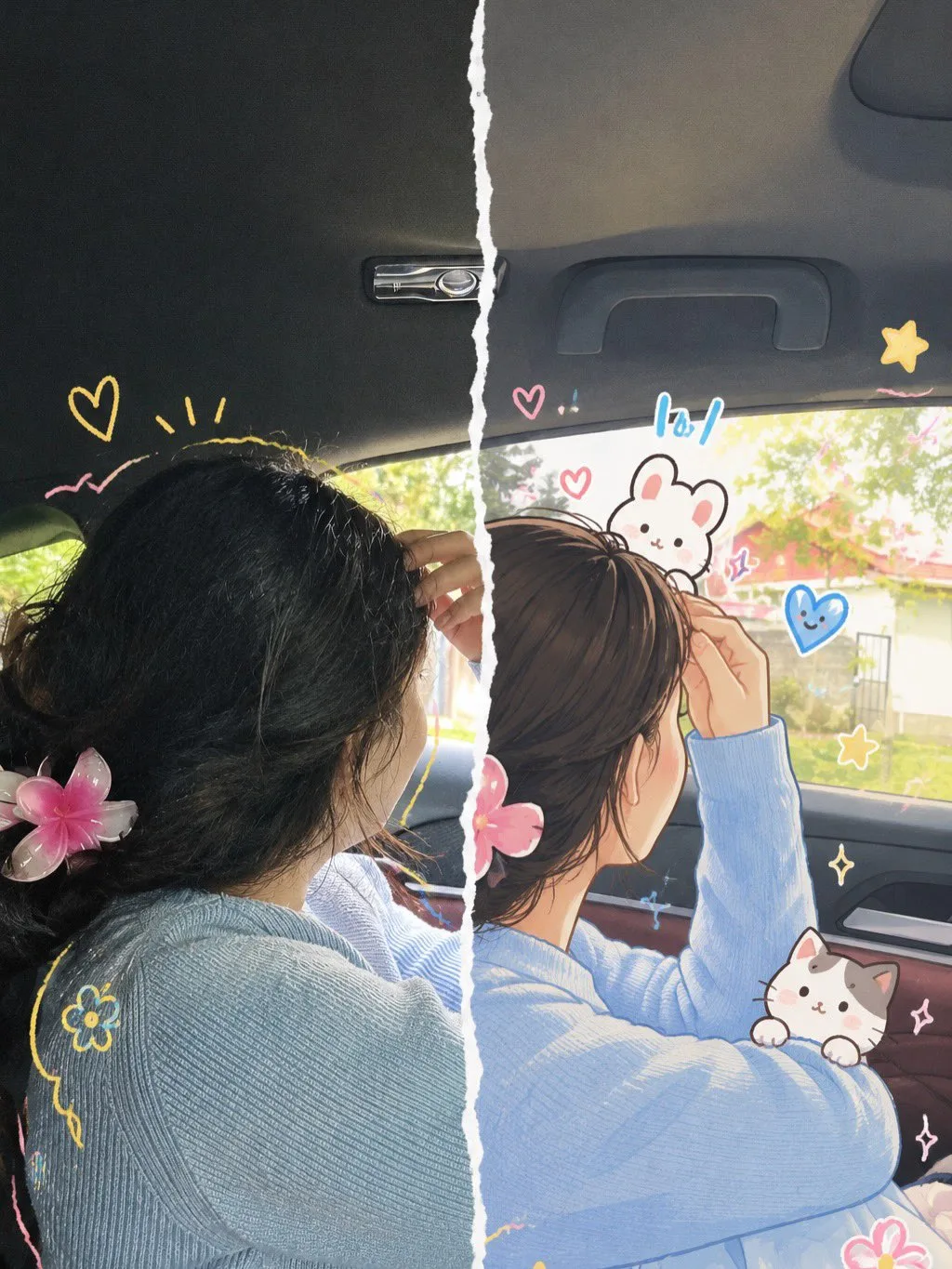
竖版上下对比现代国漫转绘设计稿
Strictly generate a vertical top-bottom comparison image: the upper half fully preserves the subject identity, number of people, actions, perspective, and scene of the input real photo; the lower half translates the same subject into modern Chinese comic and domestic 2D animation character design. Use restrained, uniform, and smooth dark thin outlines, classical slender eyes and eyebrows, generalized but accurate facial structures, clear flat-painted color blocks, low-saturation cyan-green, cream-white, and a small amount of auxiliary colors extracted from the original photo; shadows use only one to two levels of clean color planes, no realistic light and shadow. Extend the original character's clothing folds, hair, props, or environmental momentum into streamer-like long arcs and calligraphic speed lines, but the original action must remain recognizable. The background is highly simplified into large areas of warm white paper, cyan-green geometric color planes, a small amount of cloud patterns, or outlines extracted from the original scene, without stacking scenery. Add only very slight paper grain to make the image look like a contemporary Chinese comic character design draft or a domestic 2D animation keyframe. The top and bottom each occupy about half, with a clear horizontal boundary; prohibit ink painting, gongbi heavy color, Dunhuang murals, ancient painting scrolls, complex auspicious cloud stacking, realistic thick painting, 3D rendering, Japanese manga big-eye faces, Western comics, photo filters, side-by-side arrangement, nine-grid layout, changing the number of people and poses, duplicating people, excessive xianxia special effects, text labels, watermarks, and "Original Photo/AI Image" tags. Character clothing does not need to be fixed as Hanfu: modern clothing, sportswear, ethnic costumes, and travel outfits should all be designed in a Chinese comic style based on the original photo.
About this prompt
This prompt creates a striking vertical split image where the top half faithfully reproduces the original scene, including all people, actions, and perspective, while the bottom half transforms the same content into a contemporary Chinese comic style. The key visual cues are the thin, uniform dark outlines, the slender yet characteristic eyes, flat‑painted low‑saturation color blocks, and a strong emphasis on clean, flat shadows with only one or two color planes. Motion is conveyed through long arc‑like lines and speed strokes that echo the original action, all set against a minimal background of warm white paper and simple geometric color planes. To adapt this for other comics, keep the outline and flat‑color technique, but swap the color palette for warmer hues or different line weights. For a more realistic look, increase shadow depth or add subtle gradations, but preserve the clear split boundary between the two styles.
More like this