暖白水彩双重曝光旅行海报风格转绘
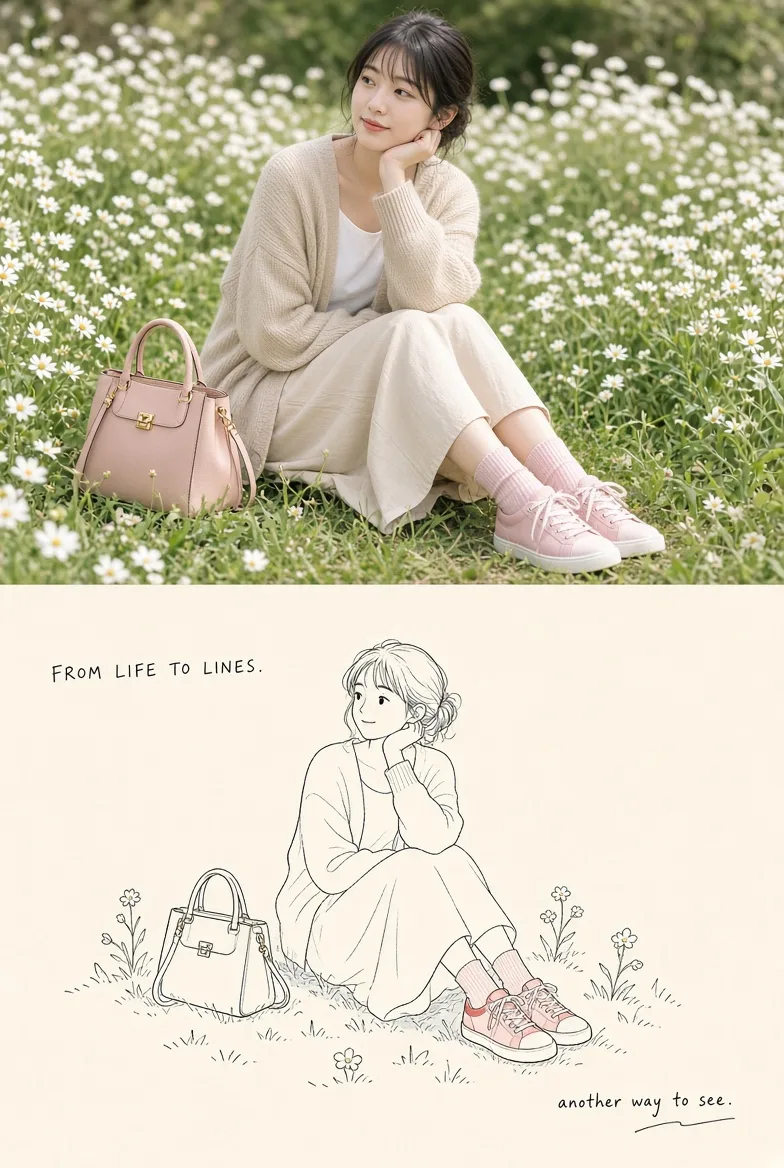
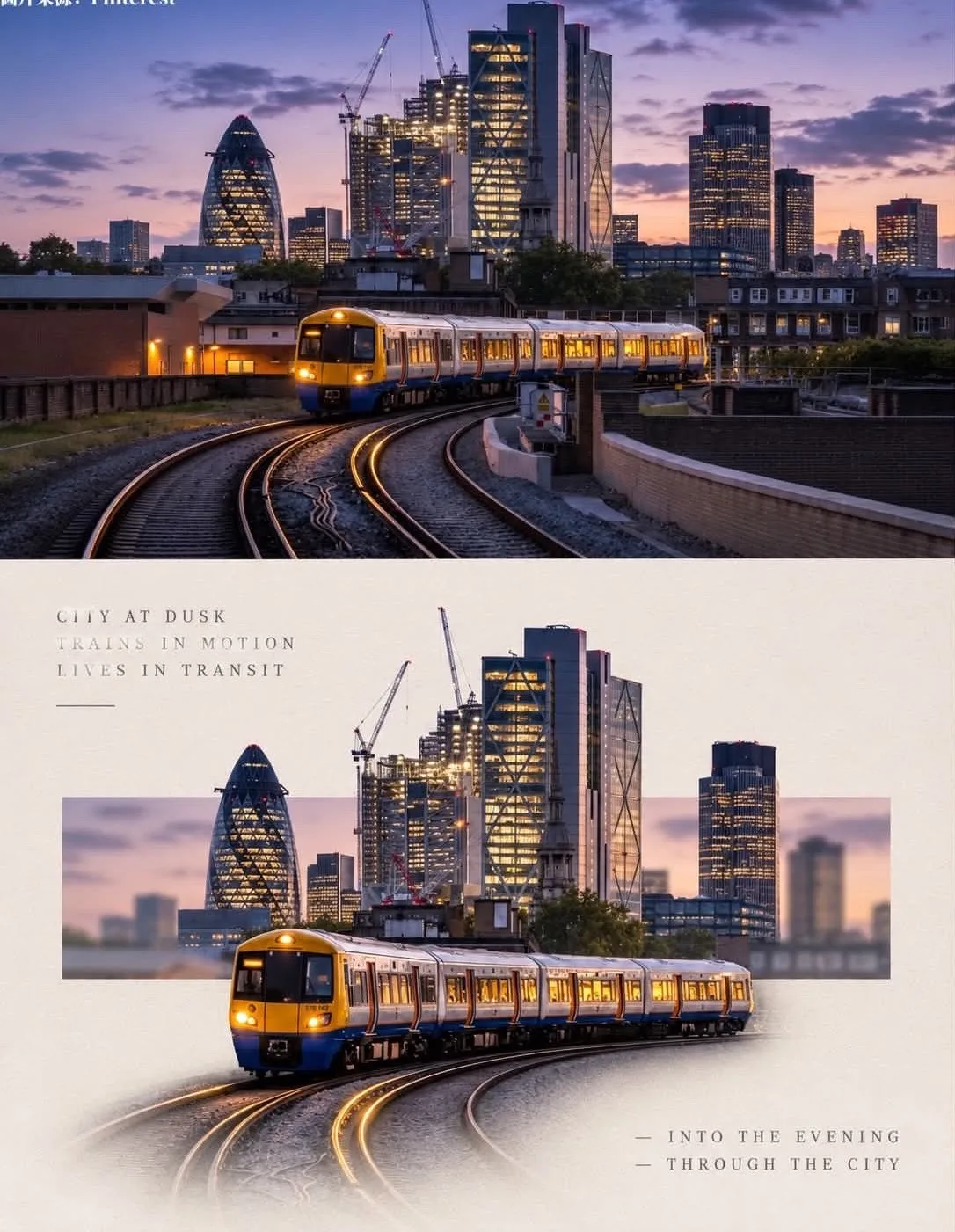
Input images: Input photos are the only source of truth; the upper half is the real photo, the lower half is a stylistic re-rendering of the same photo. Primary request: Strictly create a vertical top-bottom comparison image. The upper half completely preserves the real photographic texture, subject identity, quantity, pose, direction of movement, viewing angle, composition, and key environmental relationships of the input photo, without reinventing the photo. The lower half transforms the same photo into “WATERCOLOR DOUBLE EXPOSURE TRAVEL | Warm White Watercolor Double Exposure Travel Poster Style”: Use warm white and off-white paper as the large-area background color, retain a subject outline or core shape extracted from the original photo, and embed the environment, architecture, landforms, plants, sky, or other real elements from the same scene into the subject or extend them from the subject's edges in a double exposure manner, forming a semantic overlapping relationship; the subject and the overlaid scenery must come from the input photo and must not use fixed travel templates. Edges use natural wet watercolor bleeding, dry brush scratches, thin ink splashes, and paper fiber color absorption, with slight white gaps allowed locally, but it must not become a common filter or flat illustration. Actively change the scale, cropping, information density, and spatial organization of the subject in the lower half: the subject can be reduced and placed in a large area of white space, letting the overlaid scenery become a visual echo; do not redraw the original photo at the same aspect ratio and framing. Add a very small amount of handwritten/fine-line signatures, material fields, or a very short observation related to the photo facts, with text printed on the paper, avoiding fake characters, long paragraphs, brands, QR codes, and URLs. Composition/framing: The canvas is a clean vertical poster; top and bottom halves are approximately equal, with a clear horizontal boundary; the lower half has sufficient white space, and the overlapping shadows are concentrated with primary and secondary elements, and cannot fill the screen; no side-by-side arrangement, nine-square grids, multi-image collages, or extra photo frames. Materials/textures: Warm white coarse grain paper, paper fibers, transparent watercolor overlapping colors, wet edge bleeding, dry brushing, thin ink splashes, slight manual printing unevenness; no plastic texture, 3D rendering, heavy oil painting, or pure digital gradients. Color palette: Extract and compress colors from the input photo, using warm white and low-saturation environmental colors as the base, retaining a small amount of the most recognizable colors in the subject; no fixed orange-blue color schemes. Constraints: Maintain photo facts, subject identity/quantity/pose, and major architectural or topographical relationships; the lower half must clearly be a double-exposure watercolor reorganization of the same scene; prohibited from adding unrelated people, landmarks, animals, or vehicles; prohibited from using “Original Image” or “AI Image” badges, brand logos, or watermarks. Avoid: Only color adjustment, only adding grain, common filters, complete proportional tracing, pure watercolor landscape replacement, overly complex collages, full-page coverage without white space, blurring the subject, or incorrect text.
About this prompt
A vertical travel poster that juxtaposes a high‑resolution photograph with a hand‑painted watercolor re‑creation. The top half remains an untouched photo, while the bottom half turns the same image into a warm‑white, double‑exposure watercolor canvas, blending scenery into the subject’s shape for a poetic echo. The design uses a natural wet‑edge bleeding technique: a coarse paper texture with gentle watercolor washes, thin ink splashes, and dry‑brush highlights. The background is warm‑white paper, while muted, low‑saturation palette colors from the original photo are subtly compressed to create depth. To adapt it, keep the clean horizontal split and watercolor technique, but experiment with different color compressions or add a small handwritten note about the location. Switching the paper paper to a slightly textured vellum will change the feel without losing the poster’s integrity.
More like this