Twenty-five prompts in our library carry the marker 古风 — "ancient style", the Chinese term for historical-aesthetic imagery — and the way they are written is unlike anything on the English side of the corpus. They don't describe a scene. They assemble a mood out of fragments: four-character phrases, named historical figures, and references that assume the reader knows the culture already. How it works, read through one real prompt from the library.
The four-character phrase
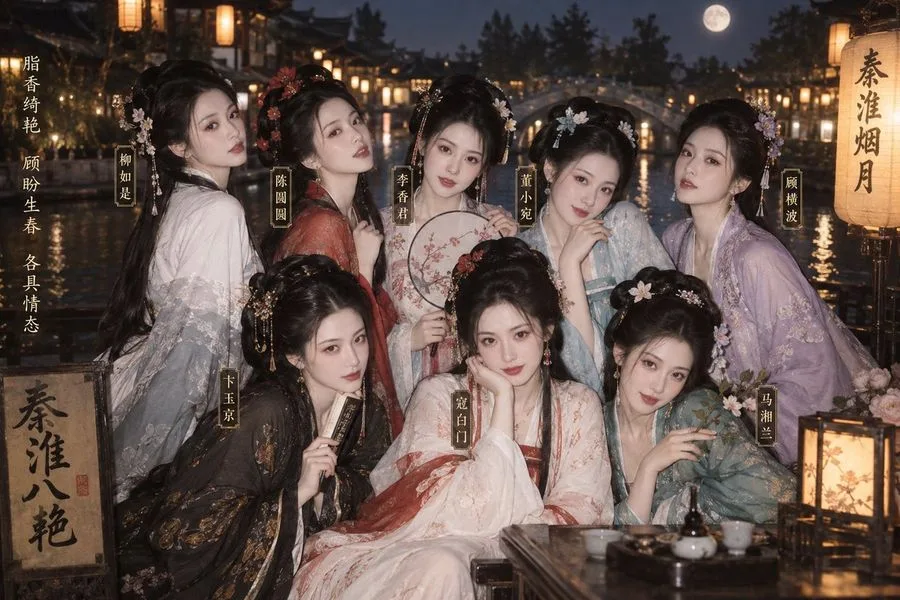
The specimen prompt opens with a string of four-character phrases: 脂香绮艳, 秦淮烟月, 顾盼生春, 各具情态. Translation flattens them — "scented rouge and splendor; misty moon over the Qinhuai; a glance that brings spring; each with her own bearing" — but the function survives translation: each phrase is a compressed style directive. 脂香绮艳 sets palette and richness. 秦淮烟月 sets the setting (the Qinhuai river, famous for its historical nightlife district). 顾盼生春 sets the gaze and the liveliness of the expression.
Chinese AI-art writers use this form because it's native to how the culture compresses description — it's the rhythm of classical poetry and of traditional art criticism. For a model trained on huge amounts of Chinese text, four-character phrases land as dense, coherent style signals. You can see the same density in the English side of the corpus with phrases like "editorial" or "golden hour" — one token doing a paragraph of work.
Named subjects as a system
Then the prompt names its subjects: 秦淮八艳 — the Eight Beauties of Qinhuai, a set of historically documented courtesans and artists of the late Ming dynasty, listed by name one by one. This is a distinctly Chinese prompting habit: invoking a known cultural set as a kind of semantic shortcut, because the model already associates each name with a period, a class of dress, a demeanour. The equivalent in English prompts is thinner — you see "flapper" or "1950s housewife", rarely an enumerated cast. When the prompt lists the eight women individually, it's not being thorough; it's steering the group composition one identity at a time.
The anachronism engine
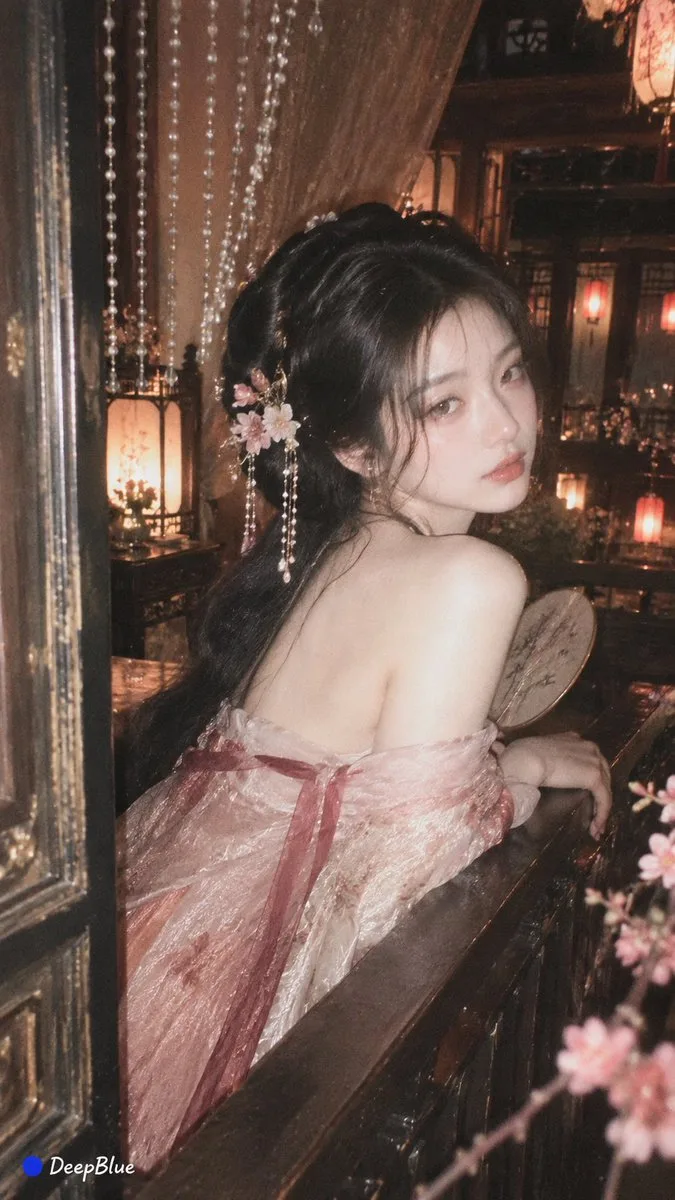
And then the specimen does the thing that makes modern 古风 so alive: in among the classical phrases sits CCD直闪 — "CCD direct flash" — the phrase we tore apart in the CCD flash teardown. The historical subject is photographed with a 2000s digicam flash. The collision is deliberate, and it's the signature move of contemporary Chinese portrait prompts: keep the classical styling, add a modern camera's flaws, and the image stops being a costume drama and starts being a photo someone took.
Writing it in English
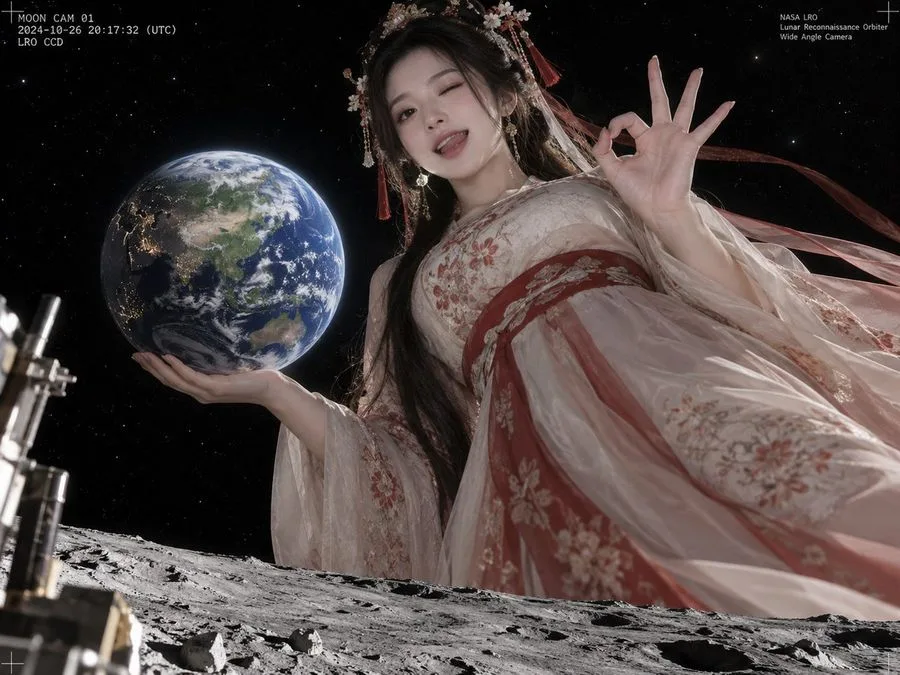
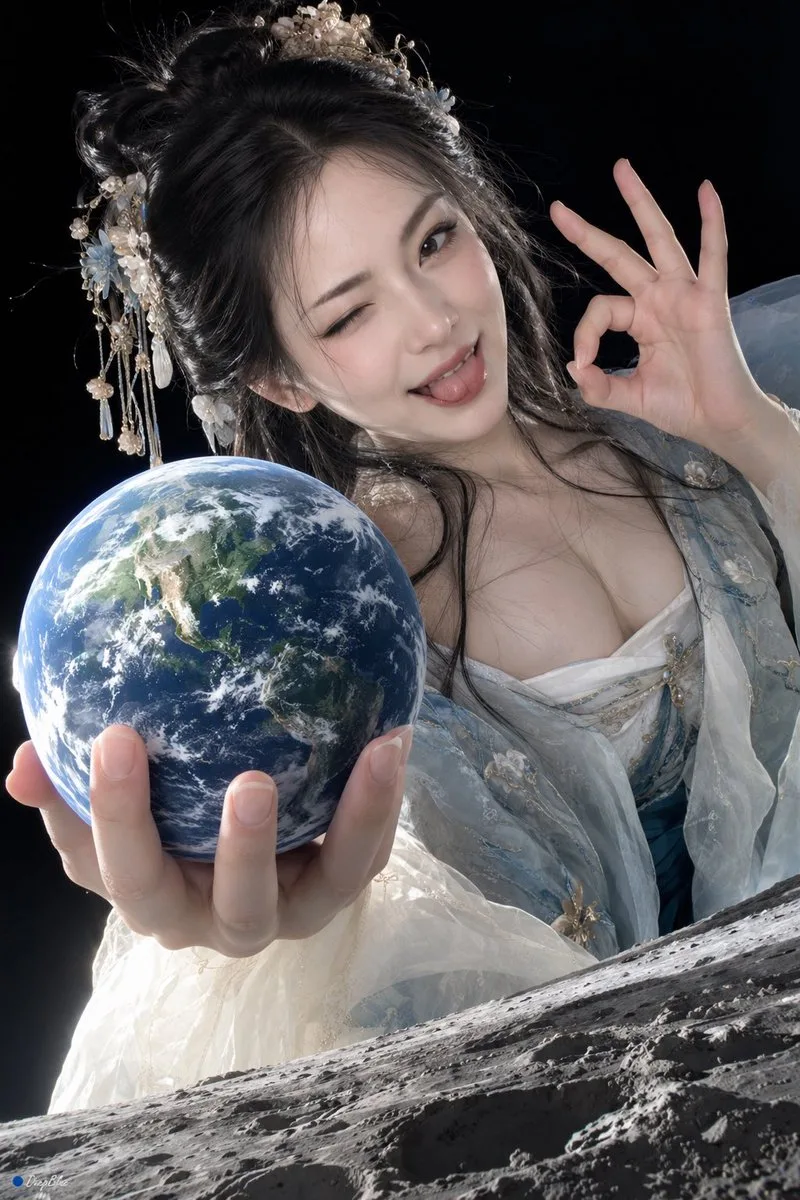
The same aesthetic comes back on the English side of the corpus with a different method — enumeration instead of compression. This moon-giantess prompt describes the look the long way: "colossal young woman wearing traditional Hanfu", "flowing white and red silk robes with intricate floral embroidery", "elaborate golden headdress with tassels". Every element that a four-character phrase would compress into four characters becomes a physical detail. And the scale play — a planet-sized hanfu figure — is a genre in its own right: classical styling against cosmic scale, the oldest costume in the newest frame.
How to use this
- If your model handles Chinese well, four-character phrases are legitimate prompt vocabulary — dense, native, and effective. Pick two or three; more becomes noise.
- Named cultural sets (a dynasty, a historical cast, a specific garment system) steer class and period better than adjectives like "ancient" ever will.
- Copy the anachronism trick: classical styling plus a modern camera phrase is what makes the look read as photography instead of illustration.
- In English, do the compression manually: replace each four-character idea with one concrete physical detail — a specific robe colour, a named headdress, a documented setting.
Deep dives on individual prompts of this family — what each phrase does, what to swap — sit under the images themselves: start with the Qinhuai portrait and its CCD cousin.